
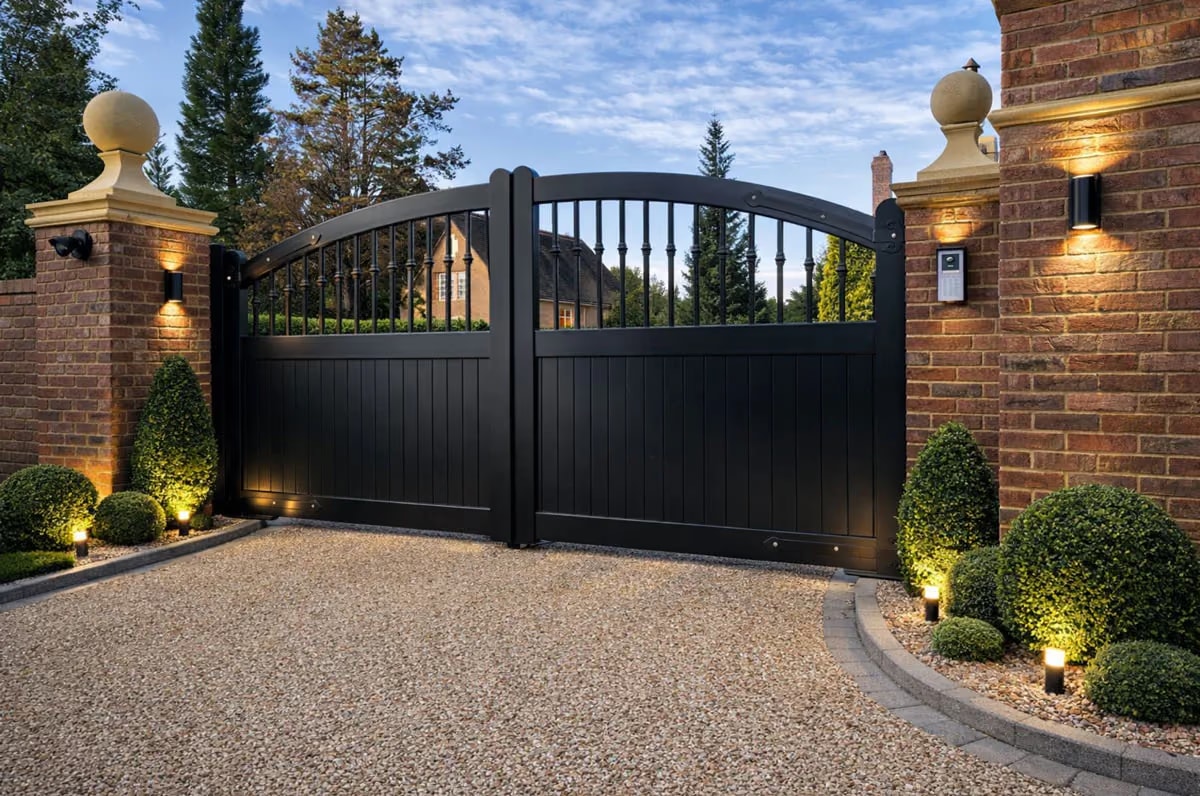
Solutions
Automated gate systems, designed and installed as one specification.
Whether it's a new driveway entrance or bringing an existing gate under motorised control, every system starts with a survey — not a catalogue page.
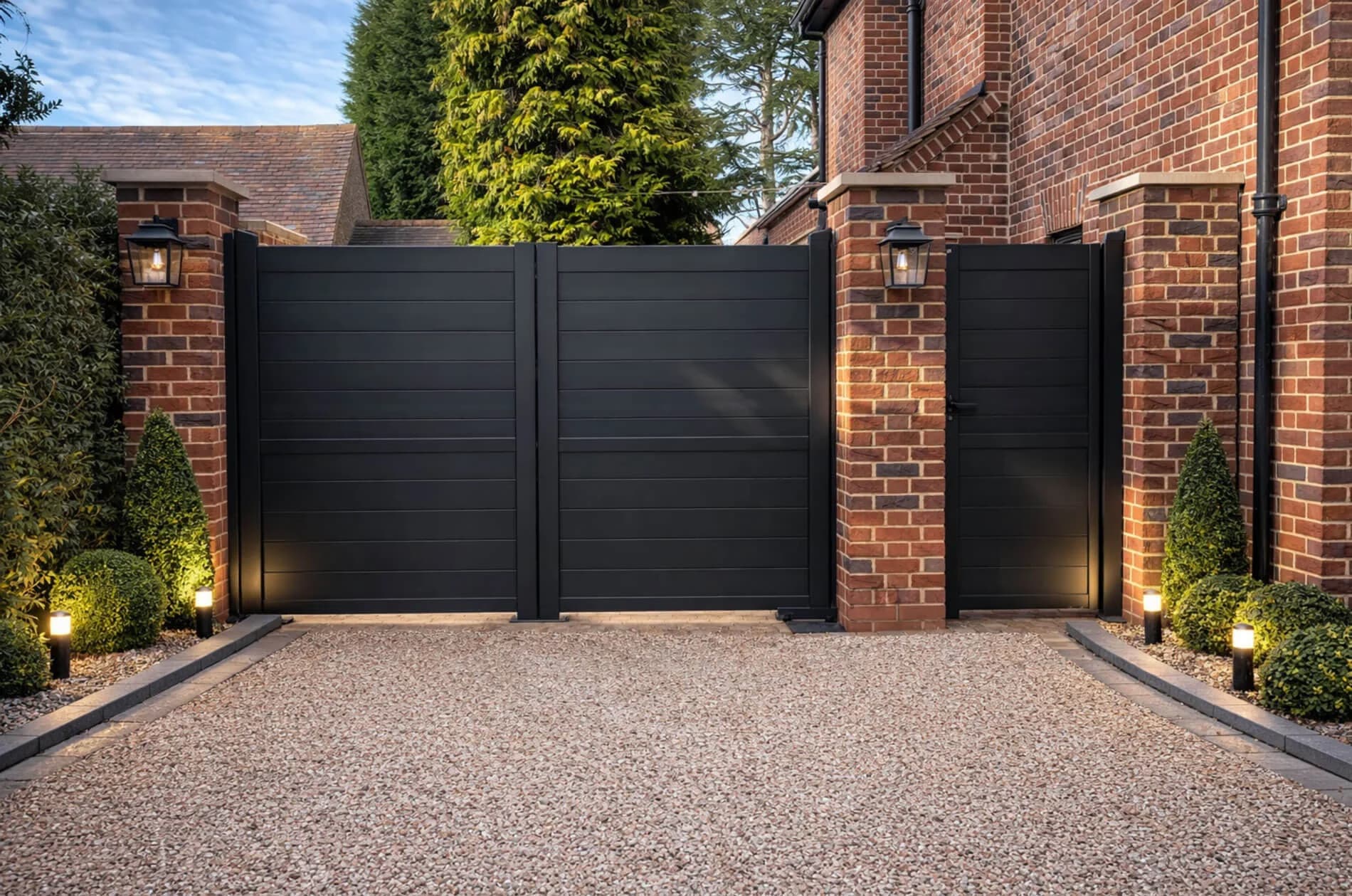
New automated gate systems
A complete specification from survey through to handover — gate style, material, automation and access control chosen for your site rather than assembled from a fixed package.
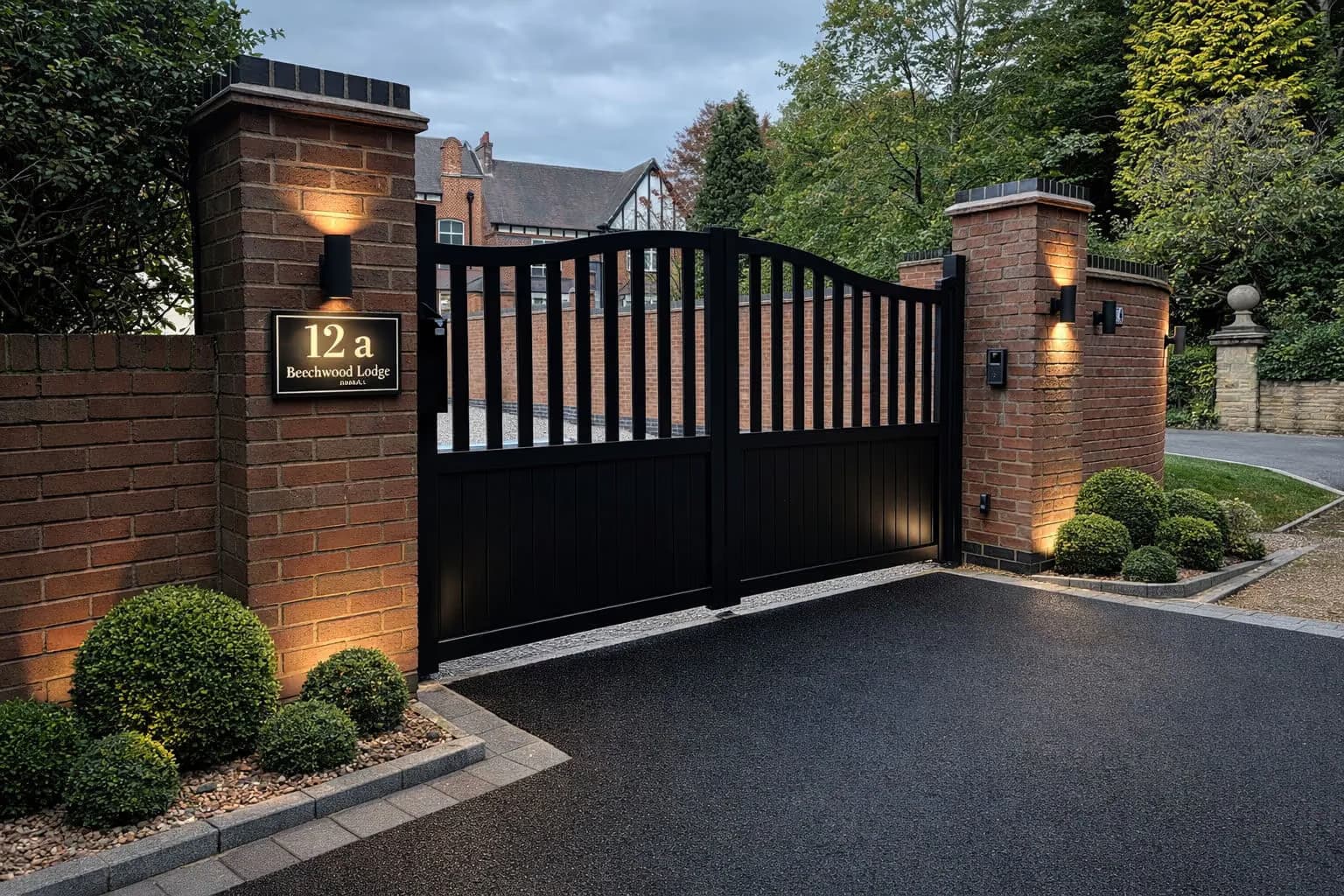
Automation for existing gates
Many existing manual gates can be brought under motorised control. A survey confirms whether the gate is structurally suitable, and whether safety devices need adding to meet current safe-operation practice.
Request a retrofit survey
Automation Technology
Whether the system is new or retrofitted to an existing gate, the operator, control board and safety devices are specified from established gate-automation manufacturers — sized to the leaf weight, the opening and how often the gate runs.
What A System Includes
Six parts of an automatic gate, specified together.
An electric gate is more than a gate with a motor bolted on. These are the parts a proper specification covers — and the questions a survey answers before anything is ordered.
The gate itself
Leaf size, weight and infill drive everything that follows. A solid, full-privacy leaf catches far more wind than an open railing design, so it needs a stronger operator and sometimes an electric lock to hold it closed in a gust.
Explore gate stylesThe operator (motor)
Swing gates use ram, articulated-arm or underground operators; sliding gates use a geared motor driving a rack. Each is sized to the leaf weight, the length of travel and how many times a day the gate runs — a busy shared entrance needs a higher duty cycle than a single household.
Control panel and safety devices
Photocells, safety edges and force limiting stop the gate when something is in its path. BS EN 12453 is the standard UK installers work to for the safe use of powered gates, and a completed installation should be handed over with its safety testing documented.
Access control
Remotes, keypads, proximity fobs, app-based entry, GSM or video intercoms and number-plate recognition — chosen around who comes and goes, rather than bundled by default.
Compare access control optionsPower and backup
Most systems need a mains supply at the gate position, usually a dedicated fused spur. Low-voltage operators can run on battery backup through a power cut, and every system has a manual release so the gate can be opened by hand.
Groundwork and posts
Hinge posts and pillars must carry the load of a moving leaf; tracked sliding gates need a level concrete running line, and cantilever gates a foundation for the roller carriage. Existing brick or stone piers are checked before they are trusted with automation.
Gate Styles
Popular directions for automated driveway gates.
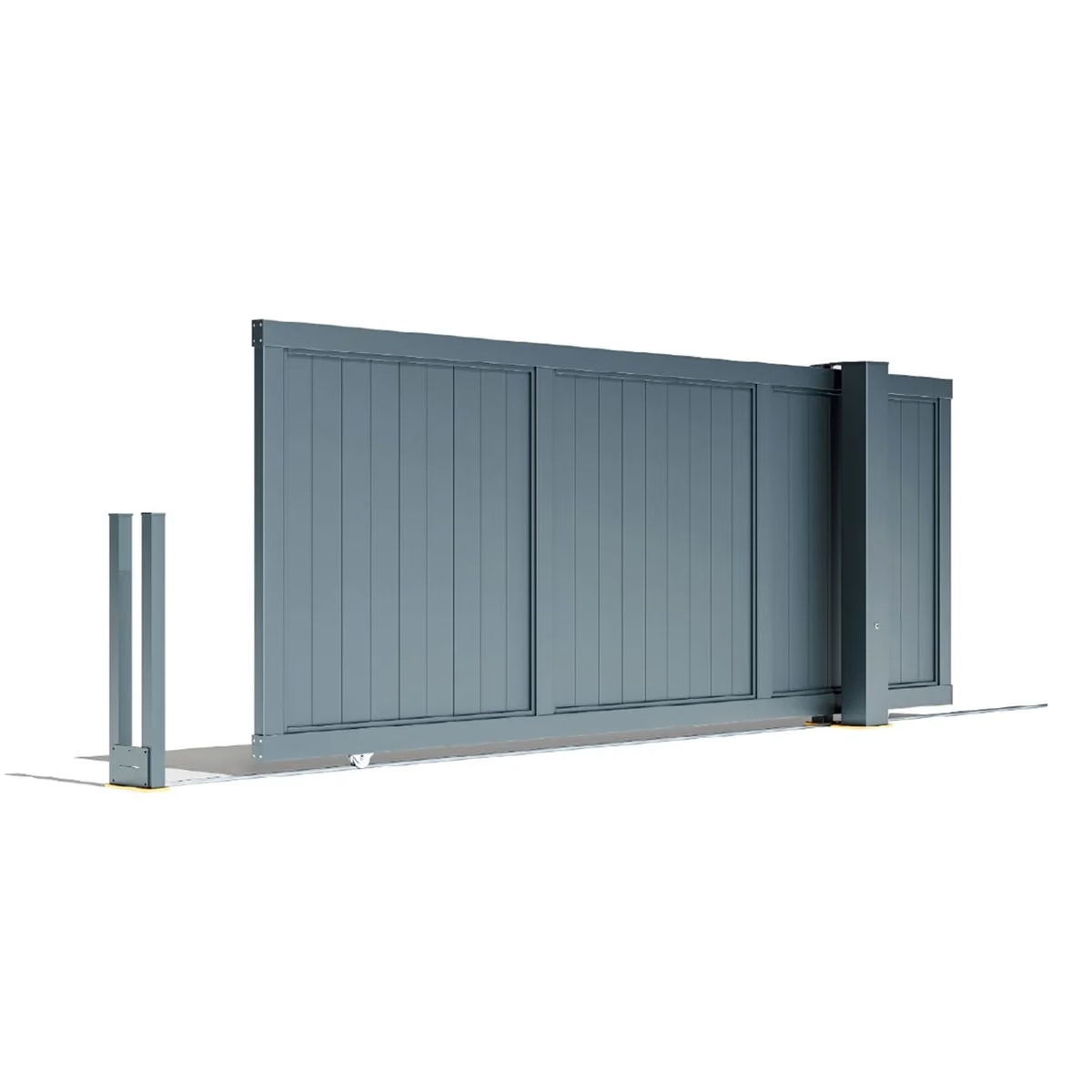
Contemporary Vertical Privacy — Sliding
A clean vertical-slat aluminium design that reads as a single architectural plane. Full privacy screening with a low-maintenance powder-coated finish, engineered for track-mounted sliding operation where a swing arc isn't practical.
View style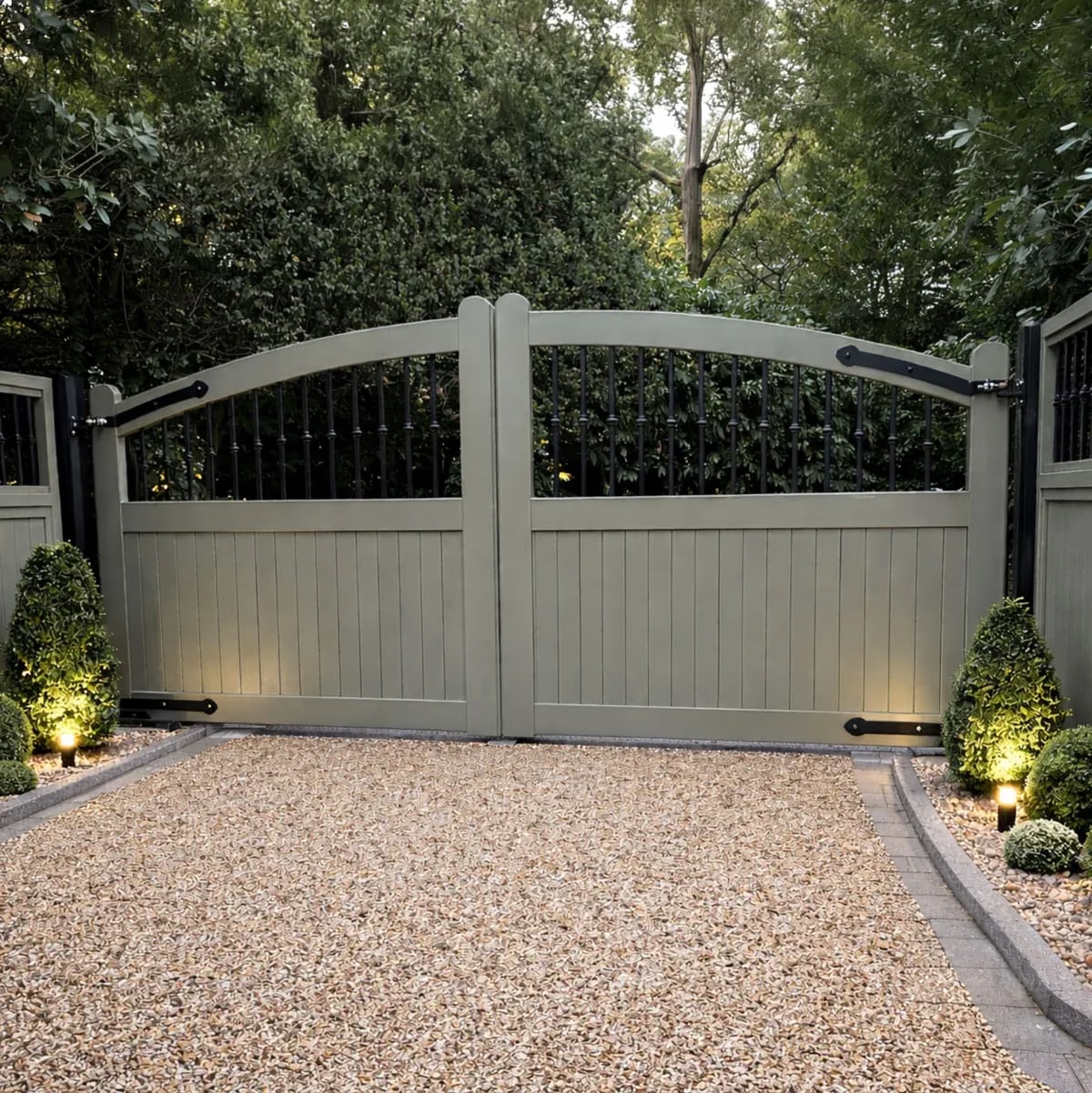
Contemporary Horizontal Slatted — Swing
Horizontal slats with graduated spacing balance privacy with light and visibility — a popular choice where a driveway needs to feel open without losing screening at eye level. Available as a double-leaf swing gate for wide openings.
View style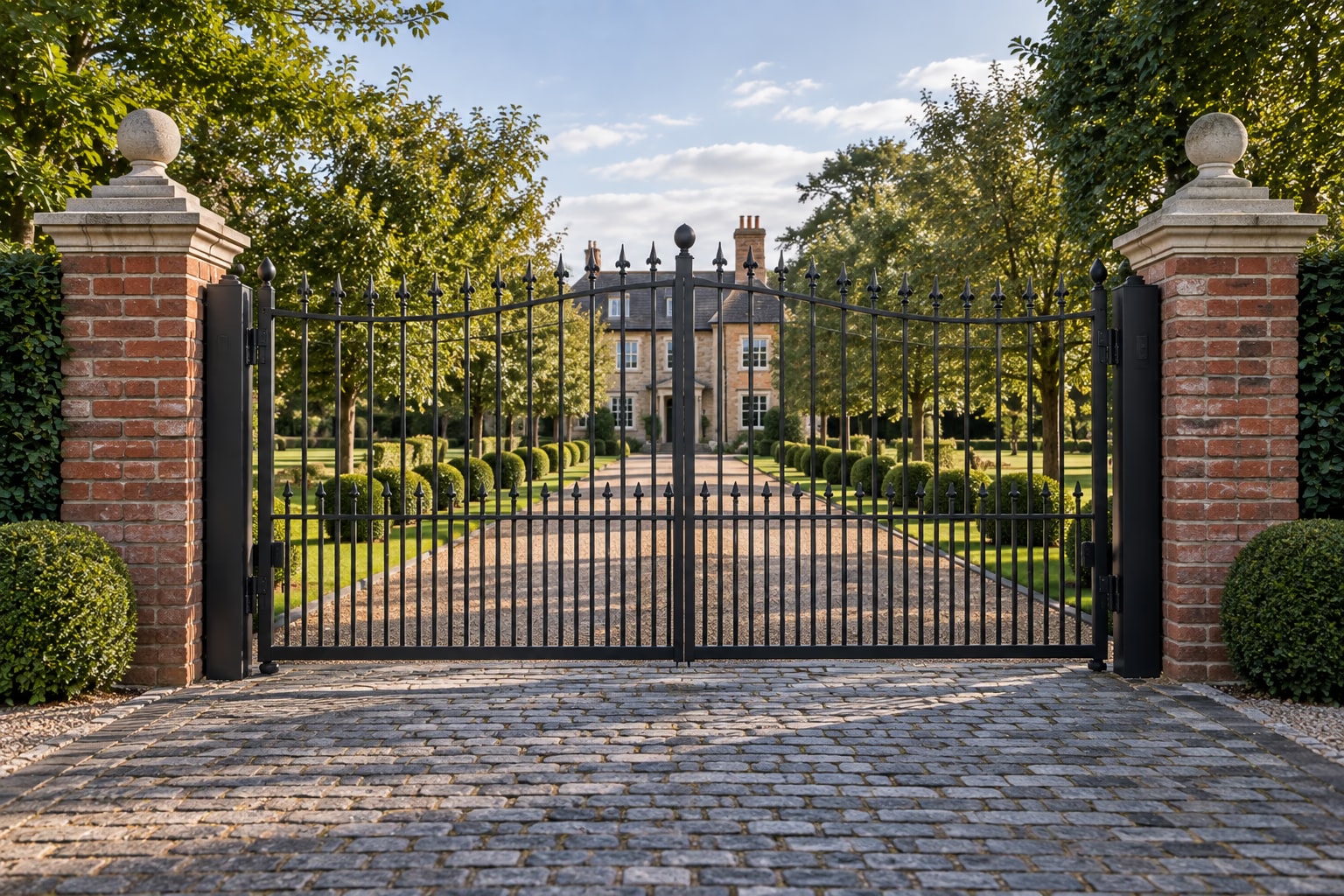
Traditional Estate Railing — Swing
Vertical bar railing in the estate tradition — steel construction with decorative finials, built to complement period stonework and long driveway boundaries where an open, formal aspect is wanted rather than screening.
View style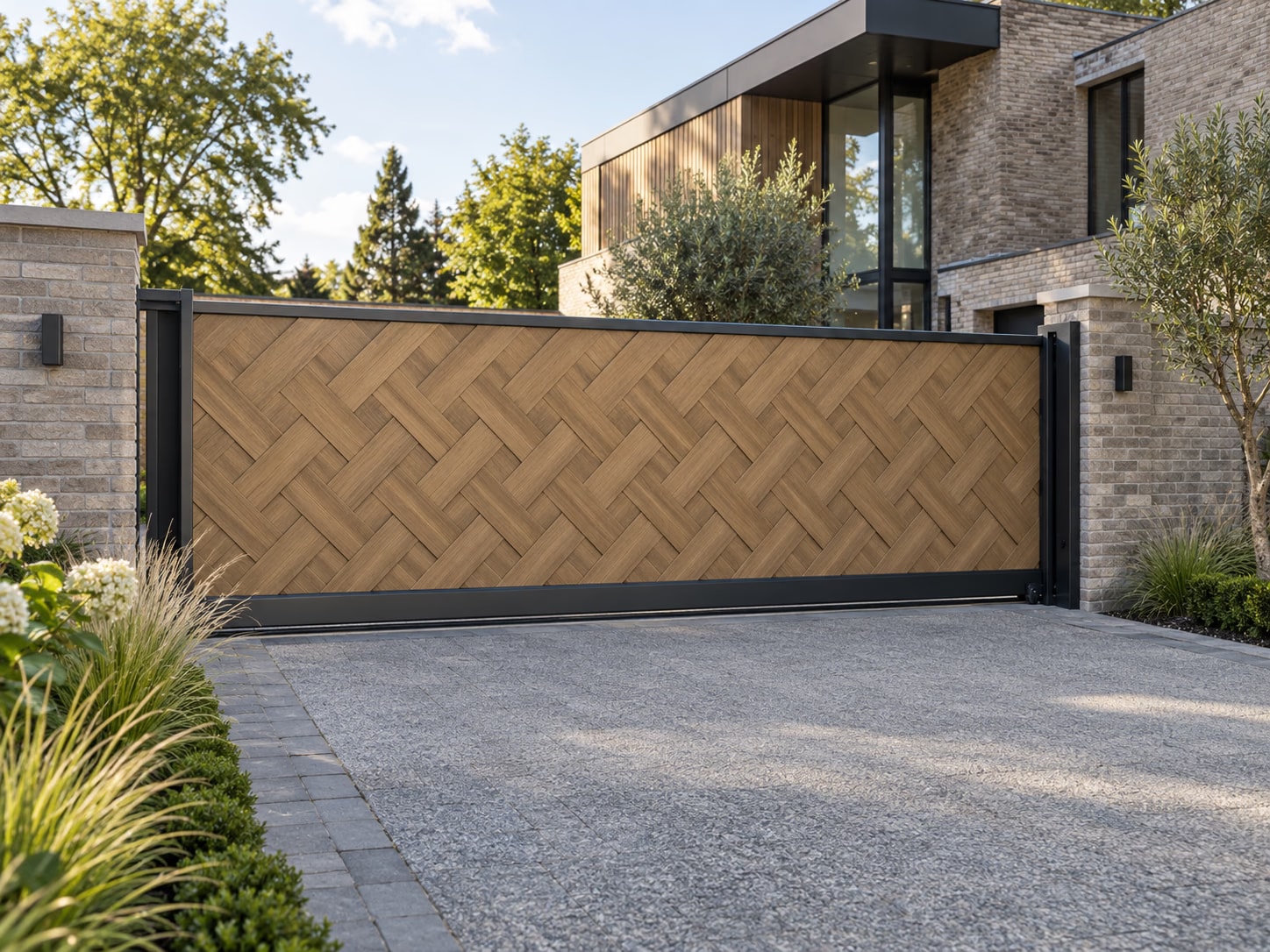
Diagonal Weave Composite — Sliding
A diagonal composite weave gives full privacy with a warmer, more textured finish than metal — a low-maintenance alternative to timber for owners who want a natural material look without the upkeep.
View style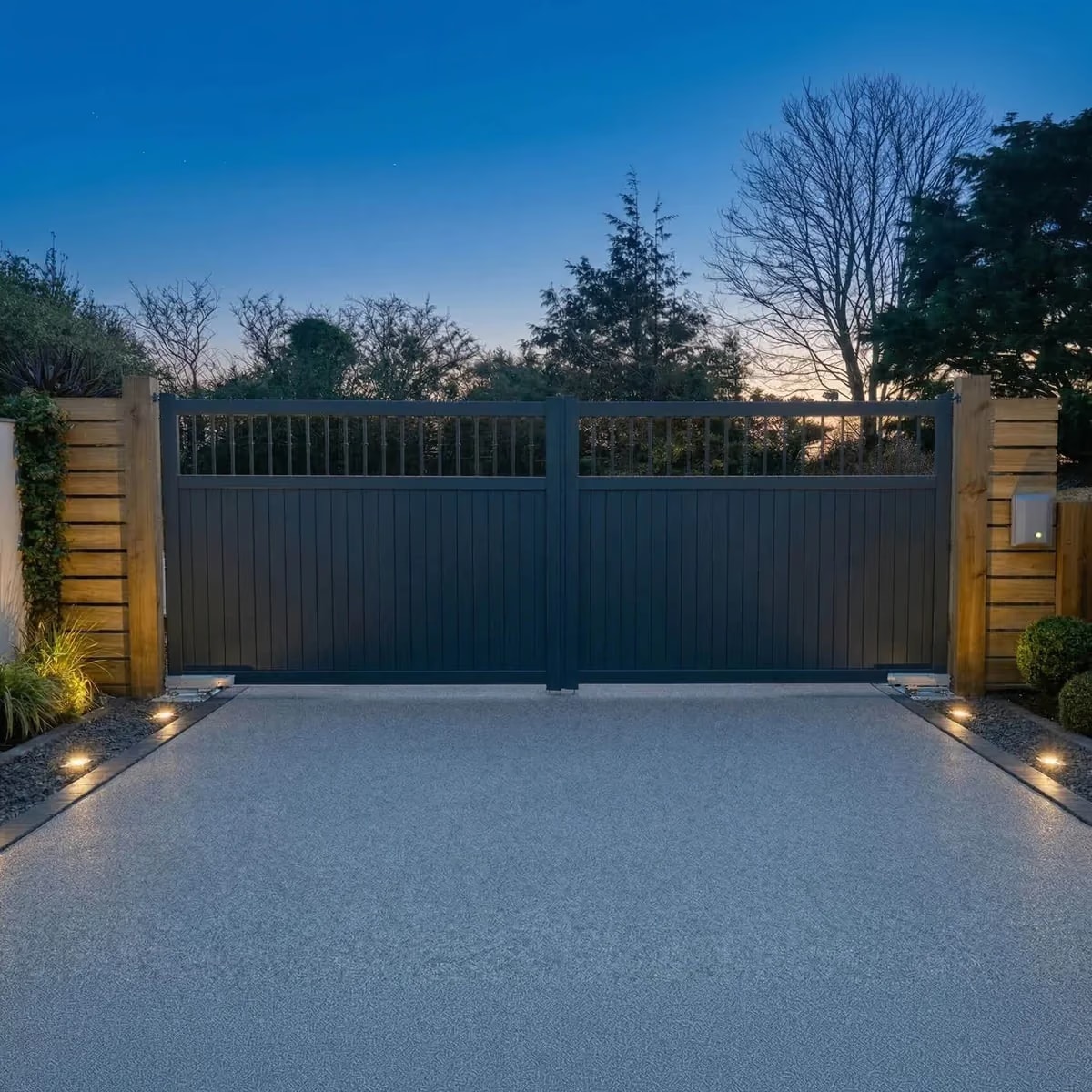
Open-Top Estate — Swing
A lower, open-top profile that marks a boundary without dominating it — well suited to entrances where sightlines matter, such as bends in a driveway or shared access with pedestrian visibility requirements.
View style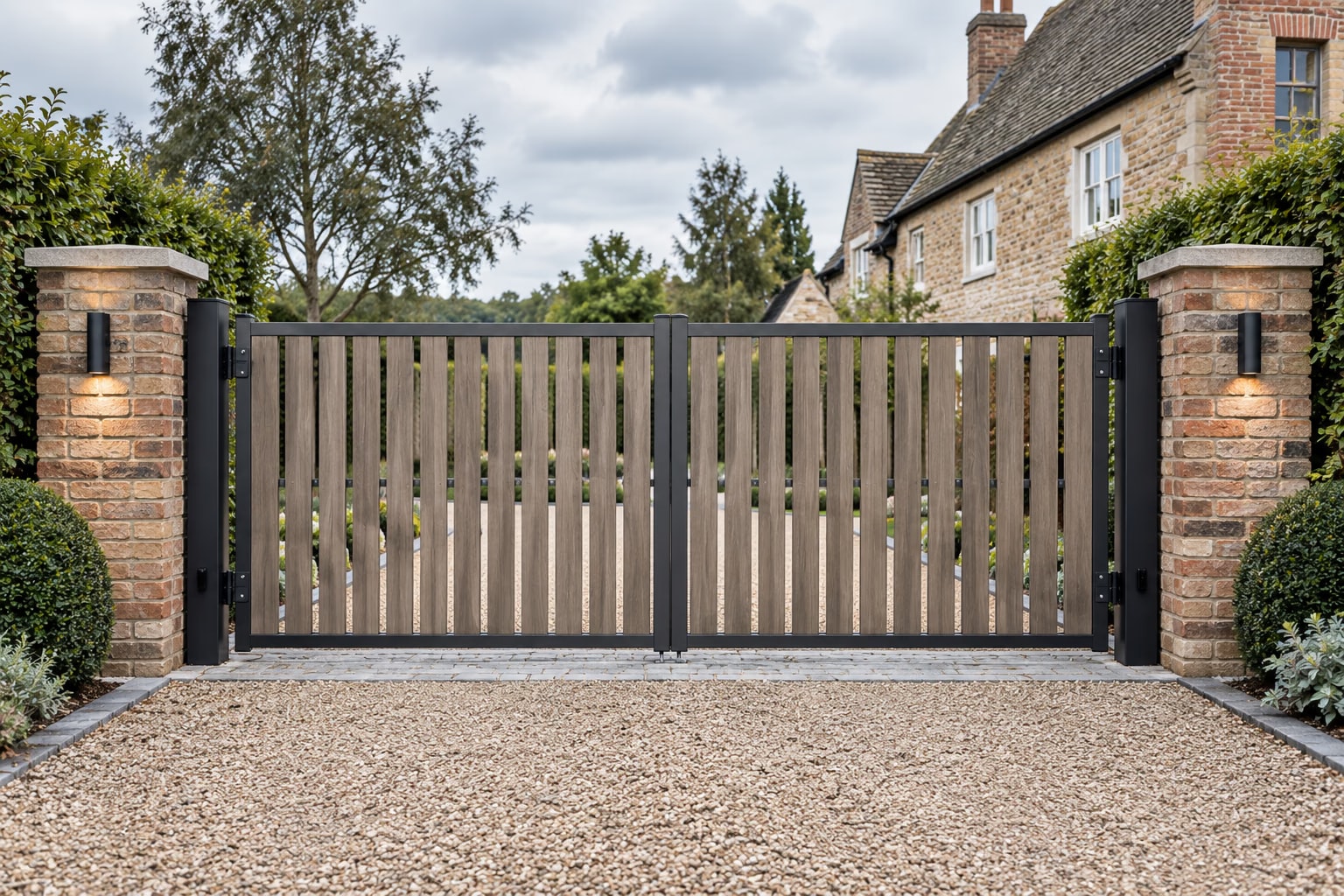
Semi-Private Picket — Swing
A picket-style vertical infill in a durable timber-effect material — cottage and village-property character with the low maintenance of a modern coated finish, sized for single pedestrian or narrow driveway openings.
View styleQuestions
Automated gates — common questions.
In most cases, yes. A survey will confirm whether your existing gates are structurally suitable for automation, and whether safety devices such as photocells and safety edges need to be added to bring the installation up to current safe-operation practice.
It depends mainly on your driveway. Swing gates need clear space for the arc of the gate to open; sliding gates run along a track or cantilever system and suit narrower or sloped driveways where a swing arc isn't practical. We'll advise on the right fit during your survey.
Most systems run from a standard mains supply local to the gate position, with a battery backup to maintain access during a power cut. Where mains power isn't available, solar-assisted options can be discussed during your survey.
Related services and advice
- Swing gatesSingle and double leaf — needs clear space for the arc.
- Sliding gatesTracked and cantilever — for wide, sloped or tight sites.
- Gate stylesFilter designs by material, privacy and opening type.
- Access controlRemotes, keypads, fobs, app entry and ANPR.
- Servicing & repairsPlanned maintenance and fault repair, including other installers' systems.
- Residential gatesDriveways, private homes and estates.
- Commercial gatesBusiness premises, developments and managed sites.
- Request a quoteThree short steps, then a specialist surveys and prices it.
Let's design the right entrance for your property.
Request a survey, start a quotation online, or speak to a specialist directly — whichever suits you best.