
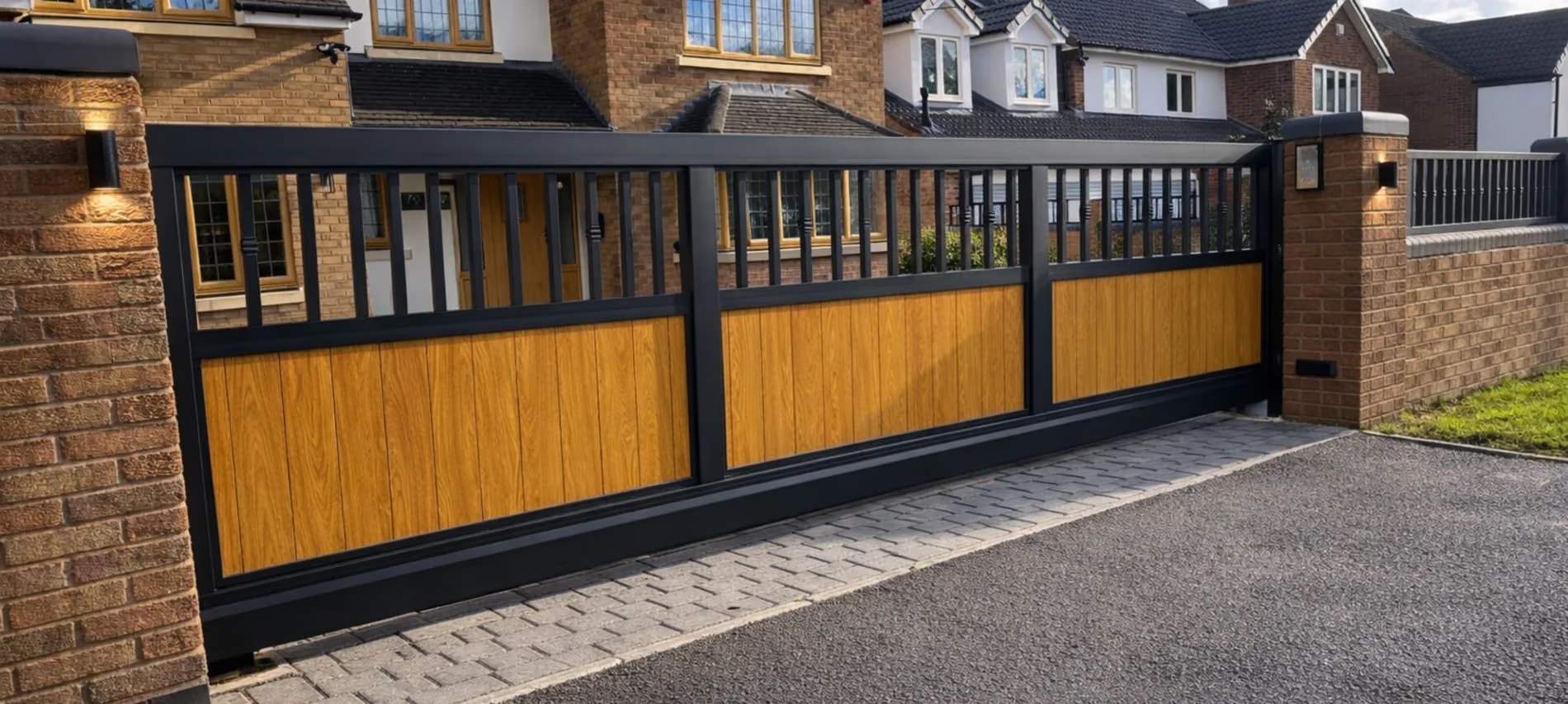
Gate Styles
Sliding gates, for wide openings and tight driveways.
Track-mounted for a level running surface, or ground-free cantilever systems for sites where a track isn't practical — sliding gates suit openings a swing arc can't.
How Sliding Gates Work
Two mechanisms, for different site conditions.
Track-mounted sliding gates run along a fixed rail set into the driveway surface — reliable, but it needs a firm, level running line for the full width of travel. Cantilever sliding gates remove the ground track entirely, supporting the gate on rollers set back from the opening, which is why they’re common on commercial and industrial sites with heavier use or difficult ground.
A site survey confirms which mechanism suits your opening, ground conditions and how the entrance is used.

Automation Technology
Sliding gate operators are specified from established gate-automation manufacturers, sized to the gate’s weight, its travel distance and the duty cycle the entrance actually sees.
Sliding Gate Styles
Design directions available as sliding gates.
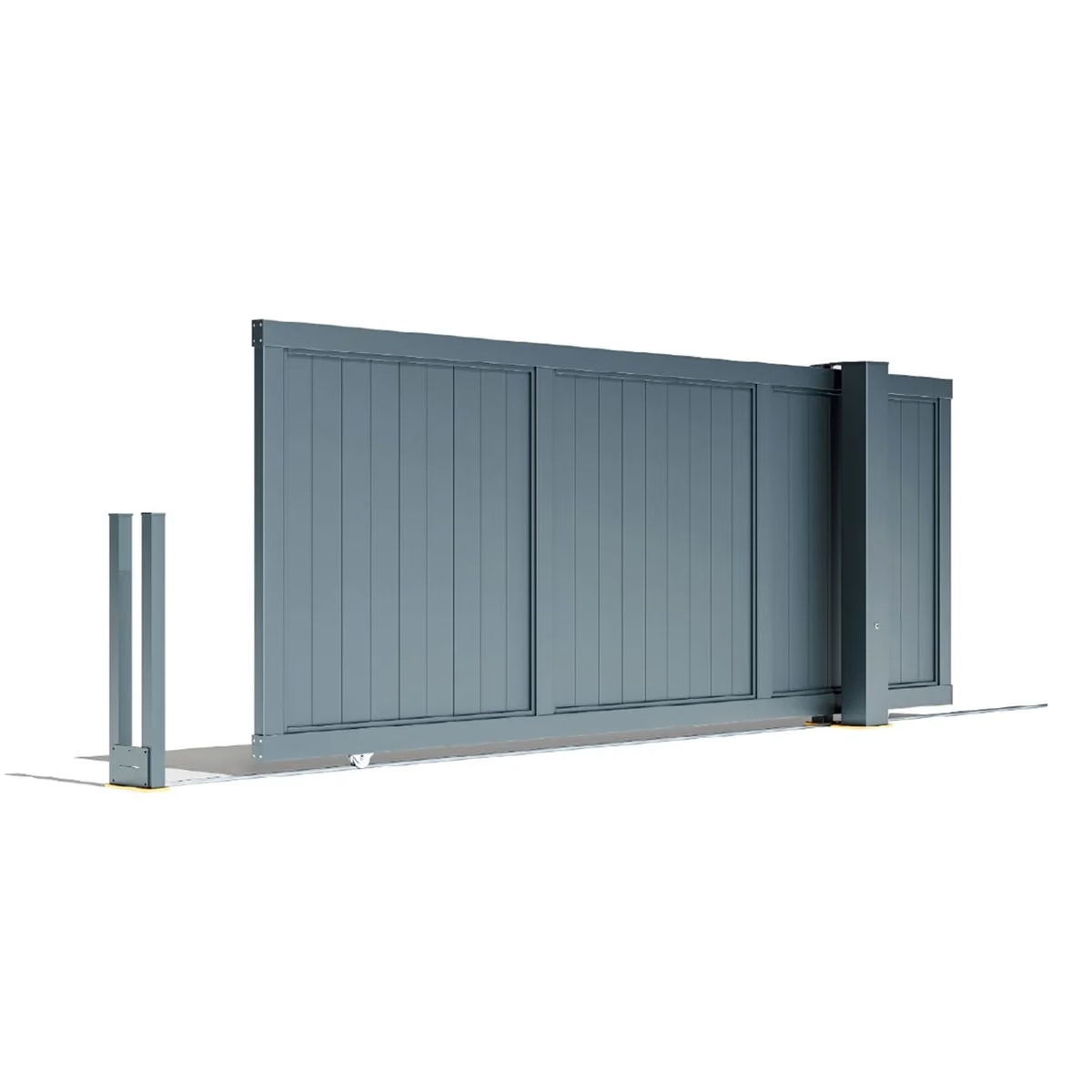
Contemporary Vertical Privacy — Sliding
A clean vertical-slat aluminium design that reads as a single architectural plane. Full privacy screening with a low-maintenance powder-coated finish, engineered for track-mounted sliding operation where a swing arc isn't practical.
View style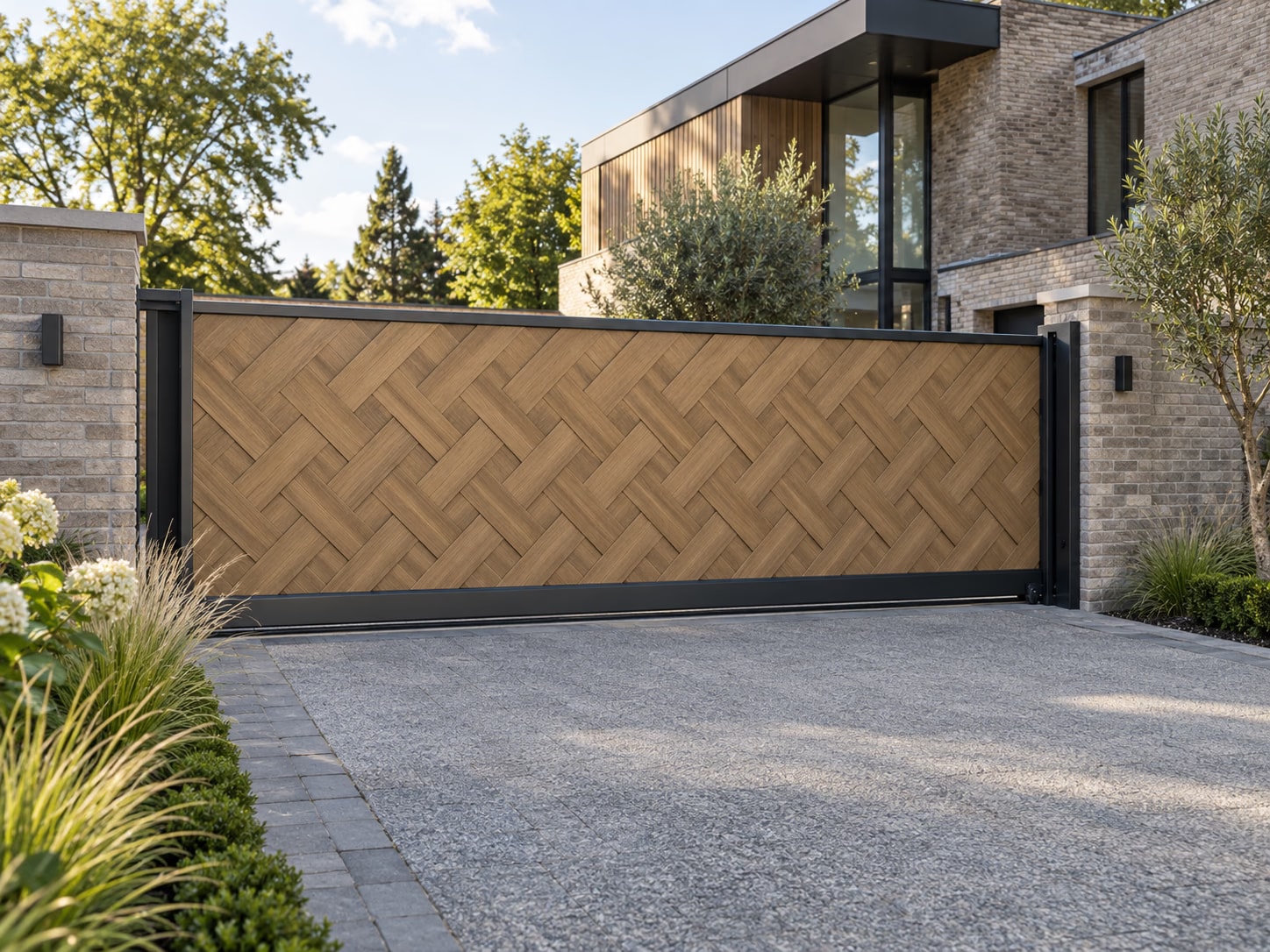
Diagonal Weave Composite — Sliding
A diagonal composite weave gives full privacy with a warmer, more textured finish than metal — a low-maintenance alternative to timber for owners who want a natural material look without the upkeep.
View style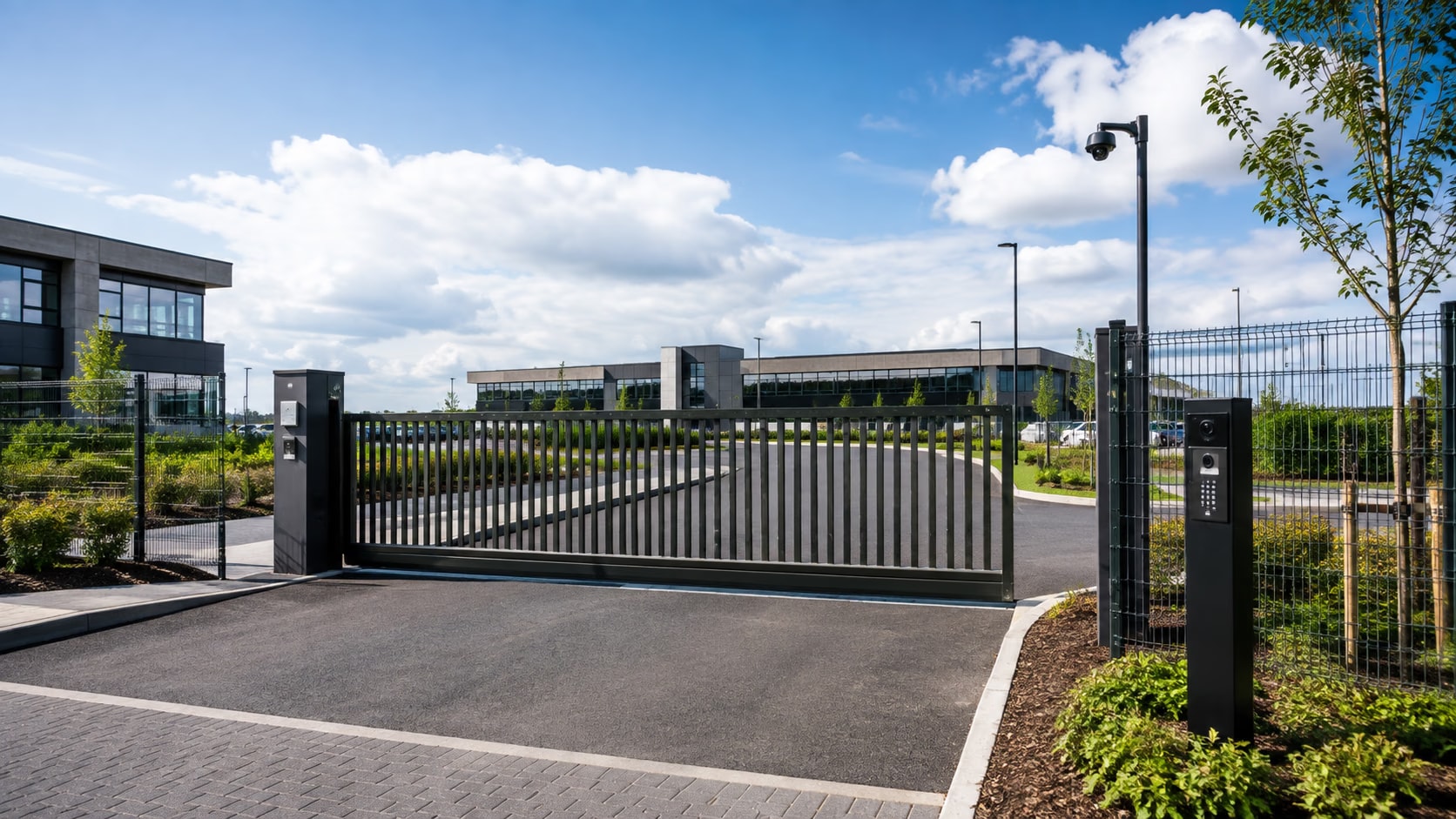
Cantilever Tracked — Commercial Sliding
Ground-free cantilever operation removes the need for a running track across the opening — ideal for commercial and industrial entrances where ground conditions, drainage channels or frequent vehicle loading make a track-mounted system impractical.
View style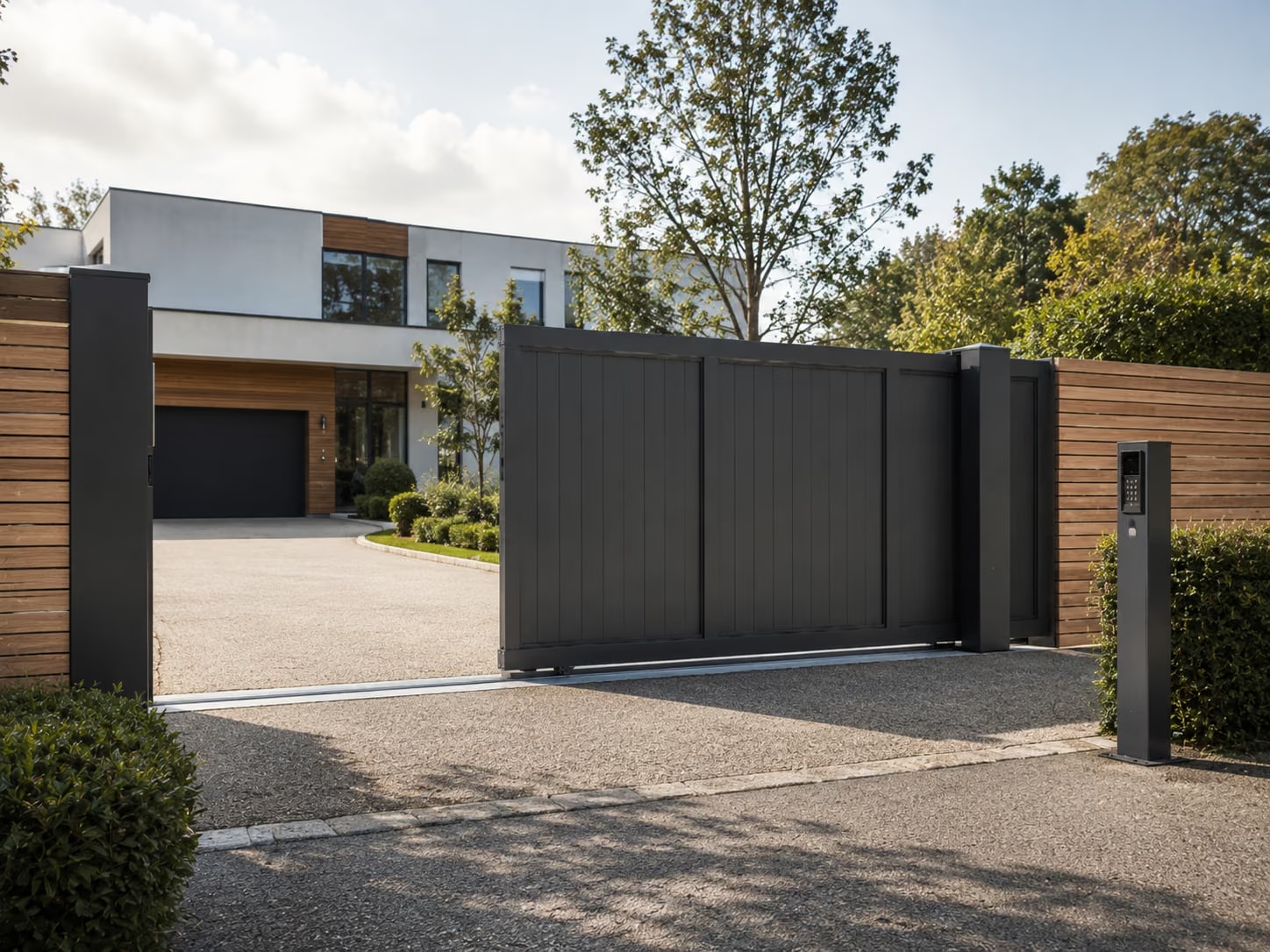
Full Privacy Board — Sliding
Solid board infill within an aluminium frame for complete screening and a quiet, flush exterior face — a strong option where the gate also functions as a boundary against road noise or overlooking.
View stylePlanning A Sliding Gate
Space, ground and duty: the three things to get right.
Run-back space
A sliding gate needs a clear run alongside the boundary to slide into. A tracked gate needs roughly the width of the opening plus a little extra; a cantilever gate is longer than the opening it closes (often around half as long again), so it needs more.
Tracked or cantilever
A tracked gate runs on a rail set in a level concrete strip across the opening. A cantilever gate hangs from a roller carriage set back from the opening, so nothing crosses the drive — better where there is gravel, a drainage channel, frost movement or heavy vehicles.
Level ground
Neither type can run up a slope along its line of travel. Where the boundary rises, the running line is levelled with groundwork or the gate is designed around it; a cross-fall across the drive is usually less of a problem.
Duty cycle
A family driveway might see a handful of cycles a day; a business entrance can see hundreds. The motor, rack and rollers are sized to the real figure, which is why commercial sliding gates use heavier operators than residential ones of the same size.
Commercial gate systemsSafety on a sliding gate
The main risks are trapping at the closing post and drawing-in at the run-back end. Safety edges on the leading edge, photocells across the opening and guarding along the run-back address both, and are tested at handover.
When the opening is tight
Sliding gates suit drives that meet the pavement directly, because nothing swings toward the road or into the parking area. Where run-back space is limited too, telescopic or bi-folding designs can be discussed at survey.
Questions
Sliding gates — common questions.
It depends mainly on your driveway. Swing gates need clear space for the arc of the gate to open; sliding gates run along a track or cantilever system and suit narrower or sloped driveways where a swing arc isn't practical. We'll advise on the right fit during your survey.
Yes — from single-entrance business premises through to multi-user developments, schools and managed properties, including vehicle recognition and visitor management for higher-traffic sites.
Related services and advice
- Guide: swing vs sliding gatesWhich opening type suits your driveway.
- Swing gatesSingle and double leaf — needs clear space for the arc.
- Gate stylesFilter designs by material, privacy and opening type.
- Guide: driveway width & planningOpening width, slopes and planning height limits.
- Access controlRemotes, keypads, fobs, app entry and ANPR.
- Servicing & repairsPlanned maintenance and fault repair, including other installers' systems.
Let's design the right entrance for your property.
Request a survey, start a quotation online, or speak to a specialist directly — whichever suits you best.